Why OPEX Efficiency Is Becoming the Real Competitive Advantage in Heavy Industry

For most of the past decade, competitive advantage in heavy industry seemed to rest on capacity. The yard that processed more scrap, the port that loaded more tons, and the plant that ran more shifts held the upper hand. That logic still applies at the margins, but inside the operations that are actually performing well in India today, the conversation has moved on.
The more pressing question is not how much a facility can theoretically produce. It is how efficiently it actually operates each day, how consistently material moves, how predictably machines perform, how quickly maintenance issues are resolved, and how closely the actual cost of running the operation aligns with what was planned. Operational expenditure has become an active competitive variable, not a fixed cost managed quietly in the background.
The Pressure Has Changed, Even If the Operation Looks the Same
India's industrial base is expanding quickly. Ports are handling more cargo. Steel consumption continues to grow. Bulk material movement is scaling across logistics corridors that did not exist five years ago. This growth is real, but it arrives alongside pressures that were easier to absorb when margins were wider. Fuel costs have risen. Skilled labour is harder to retain. Maintenance complexity has increased with newer equipment generations. Delivery commitments have tightened across supply chains.
The result is that two operations with identical capacity can produce very different profitability outcomes, depending on how well they are run day to day. What separates them is usually not the volume they can process, but the consistency with which they actually process it and the cost they incur in doing so. This is the territory where OPEX efficiency is becoming decisive.
Material Handling Sits at the Centre of OPEX, Not the Edge of It
Material handling is often treated as an operational support function, necessary but peripheral to the core business. In practice, it accounts for a significant portion of operational costs in any facility where physical materials are moved. Fuel burn, loading cycle duration, machine downtime, maintenance frequency, operator productivity, and throughput consistency are all fundamentally influenced by how well the material handling equipment matches the application and by its reliability under continuous use.
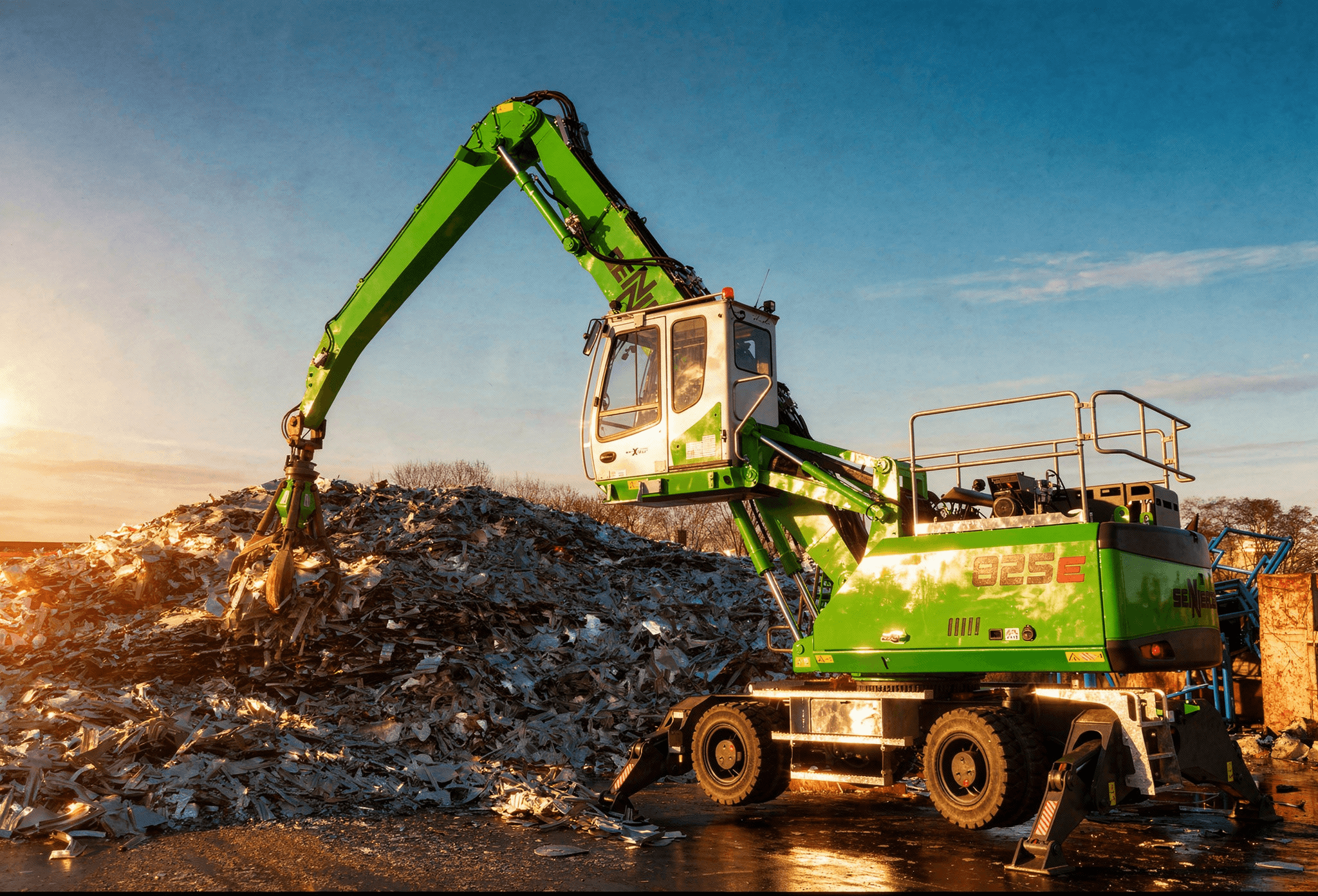
Sennebogen has documented this pattern across port, scrap, steel, and recycling applications globally: when material handling is performed by equipment engineered for the specific duty cycle rather than adapted from general-purpose machinery, the operational cost picture changes across multiple variables simultaneously. Cycle times improve. Fuel consumption per ton drops. Maintenance intervals become more predictable. Forsenia has built its approach in India around this understanding, beginning every equipment conversation not with specifications but with what the operation is actually trying to do and where the current friction sits.
Downtime Has Become a Business Continuity Question
In scrap yards, ports, steel plants, and bulk terminals, an unplanned stoppage does not simply affect the machine that has stopped. It affects truck queues, dispatch schedules, sorting lines, vessel turnaround times, and workforce utilisation across the entire operation. The visible cost of the repair and parts is almost always smaller than the operational cost of the interruption itself, which is why serious operators have stopped treating downtime as a maintenance metric and started treating it as a commercial one.
This shift is reflected in the conversations Forsenia has with plant heads and operations teams across India. The evaluation criteria have changed. Serviceability in the field, access to components, independence from specialist support, and recovery time after an interruption are now as important as machine performance under ideal conditions. Sennebogen's service-friendly architecture is built with these realities in mind, and it is a key reason Forsenia represents the brand in demanding Indian industrial environments.
Operational Intelligence Is the New Competitive Infrastructure
The operations performing consistently well today tend not to be the ones with the most equipment. They are the ones with the fewest unnecessary interruptions, the most consistent cycles, and the clearest understanding of where cost enters the system. Cost per ton handled, fuel per movement cycle, maintenance predictability, and asset longevity are now the metrics that determine whether an operation is genuinely competitive or simply running, and there is a growing gap between the two.
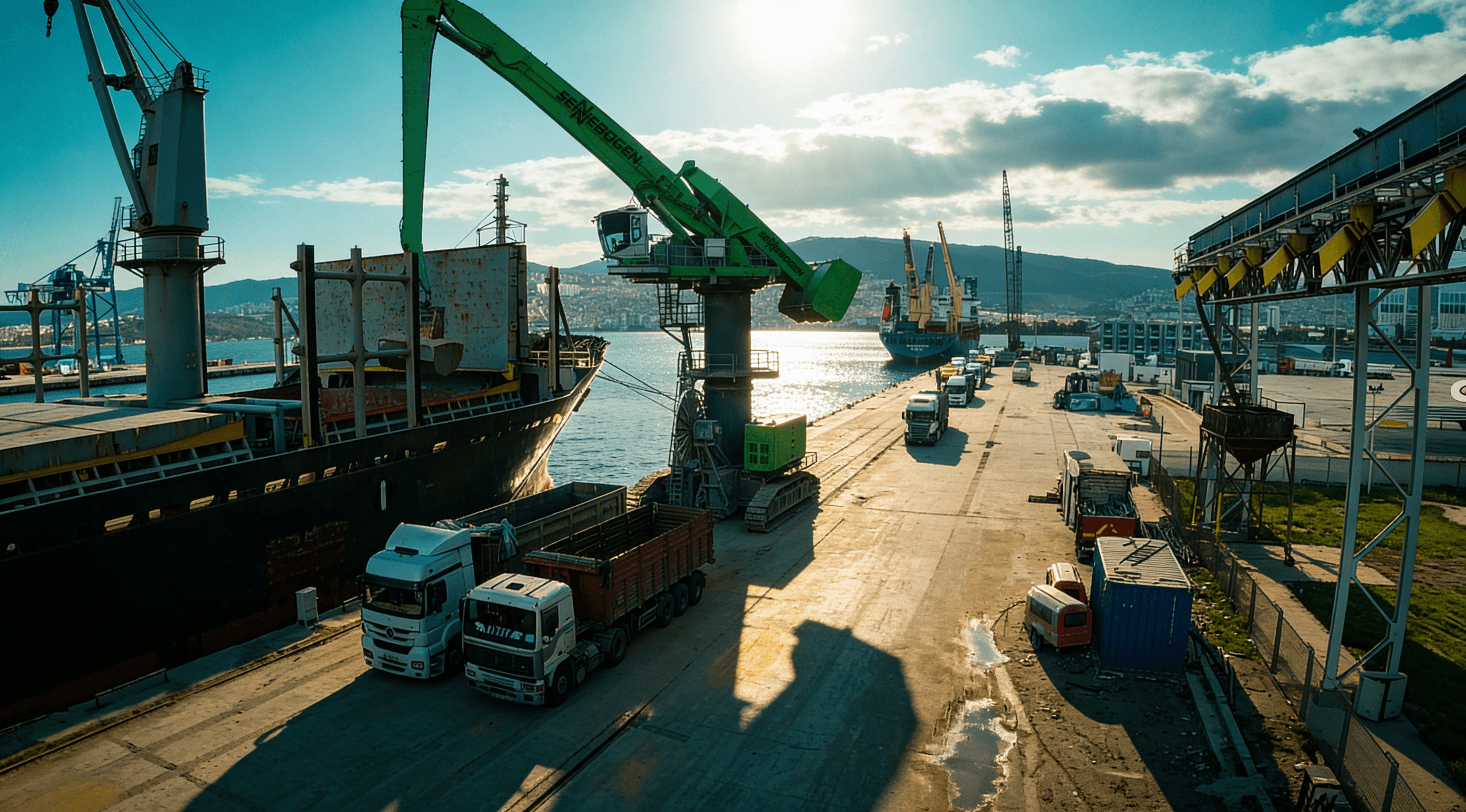
Forsenia works across ports, steel plants, scrap yards, recycling facilities, and bulk-handling environments in India to bring Sennebogen's material-handling solutions into these conversations about long-term operational efficiency. The questions being asked at this level are not procurement questions. They are strategy questions, and they deserve equipment decisions that reflect that.
Forsenia
Engineering Progress. One Lift at a Time.
Disclaimer:
The operational observations and industry viewpoints presented in this article are intended for general informational purposes only. Actual operational efficiency, throughput, uptime, and lifecycle performance may vary depending on site conditions, operator practices, machine configuration, and application environments.
Copyright Notice:
© Forsenia. All rights reserved. Unauthorised reproduction or redistribution of this content without prior written permission is prohibited.