India’s Growing Ports Need Faster Material Movement

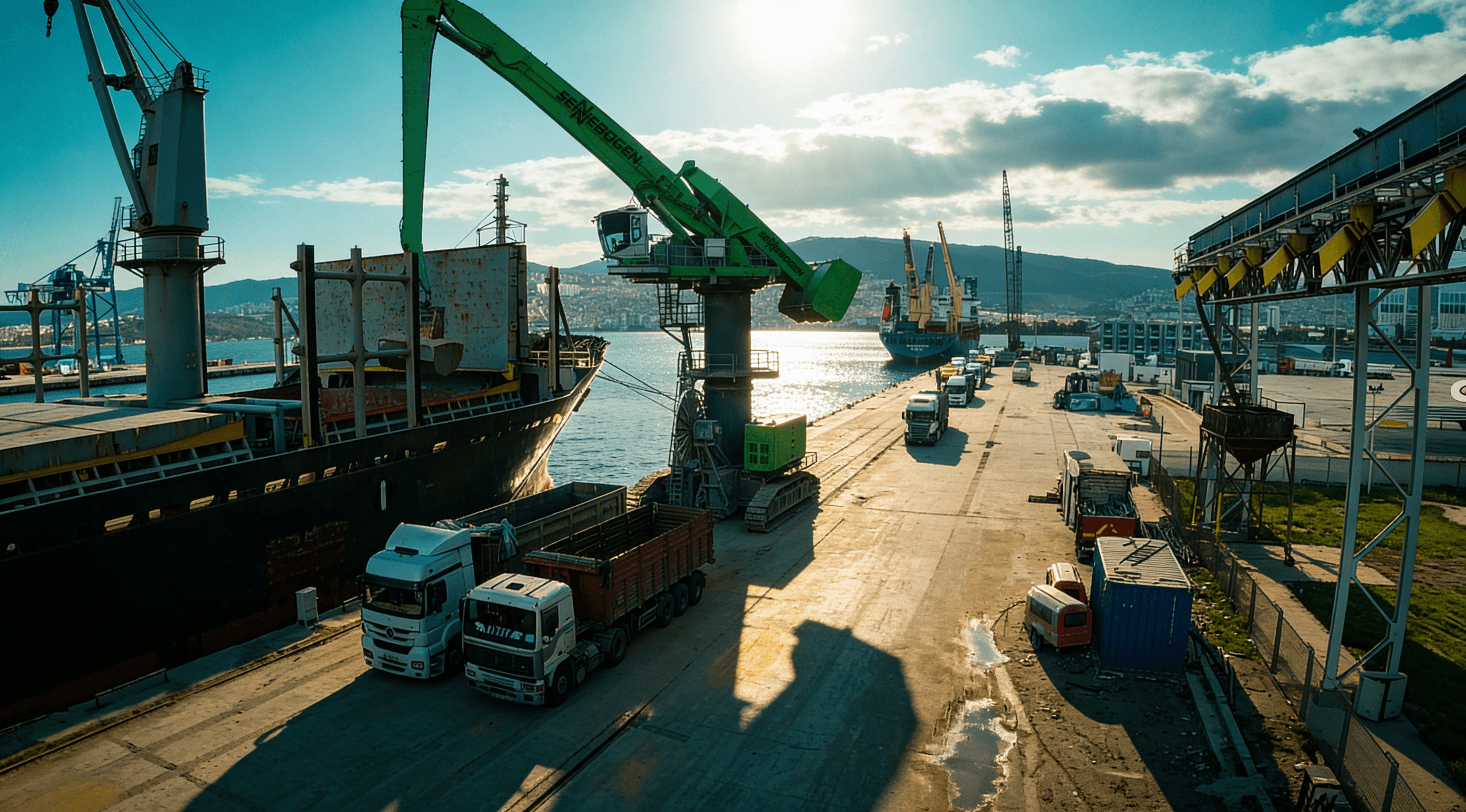
By early morning, the berth is already active. Bulk cargo has begun moving from vessel to shore while loaders, trucks, handlers, and operators work against schedules that cannot afford delay. Today, across many Indian ports, the pressure is no longer limited to handling larger volumes of cargo. The real challenge lies in how quickly material can move once it enters the terminal environment. Every slowdown in the yard begins to affect the next stage of the chain, whether it is dispatch timing, vessel turnaround, rail coordination, or downstream industrial movement.
India's ports are expanding alongside the country's manufacturing and infrastructure ambitions. New logistics corridors, industrial zones, steel capacity growth, and increased cargo movement are placing far greater demands on material handling systems than many terminals were originally designed to handle. In this environment, ports are beginning to evaluate not only lifting capacity or berth availability, but also the efficiency, consistency, and reliability of material movement across the entire operation.
Port Throughput Is Increasing Faster Than Yard Efficiency
The past decade has witnessed greater intensity in cargo transit through Indian ports. At bulk terminals handling coal, clinker, aggregates, fertilisers, biomass, scrap and iron ore, higher throughputs, tighter turnaround expectations and less operational disturbance are predicted. At the same time, a number of ports continue to operate under conditions of space restrictions, exposure to the elements and constant-duty handling, which add further operational pressures.
It is not only the crane infrastructure that increasingly divides efficient terminals from strained ones. It is the quickness and regularity of material flow between the ship, yard, storage and onward transit. Even minor disruptions in this flow begin to affect berth productivity, equipment utilisation, and operational costs per tonne handled.
Forsenia has increasingly seen this shift reflected in customer discussions across ports and industrial logistics environments in India. Operators are looking beyond isolated equipment performance and examining how handling systems influence the terminal's wider operational rhythm.
Traditional construction equipment is often unsuitable for continuous port operations.
Much of the machinery in older port settings was adapted from construction use rather than purpose-built for repetitive bulk handling. Systems like this might be adequate for modest duty,, but continuous-duty applications will reveal their limitations much sooner.
Long unloading cycles, reduced visibility, high fuel consumption, high wear, and complex maintenance needs are starting to impact uptime. In ports, these problems are rarely limited to a single computer. Any delay in handling soon impacts truck traffic, vessel schedules, stockpile management and workforce coordination across the yard.
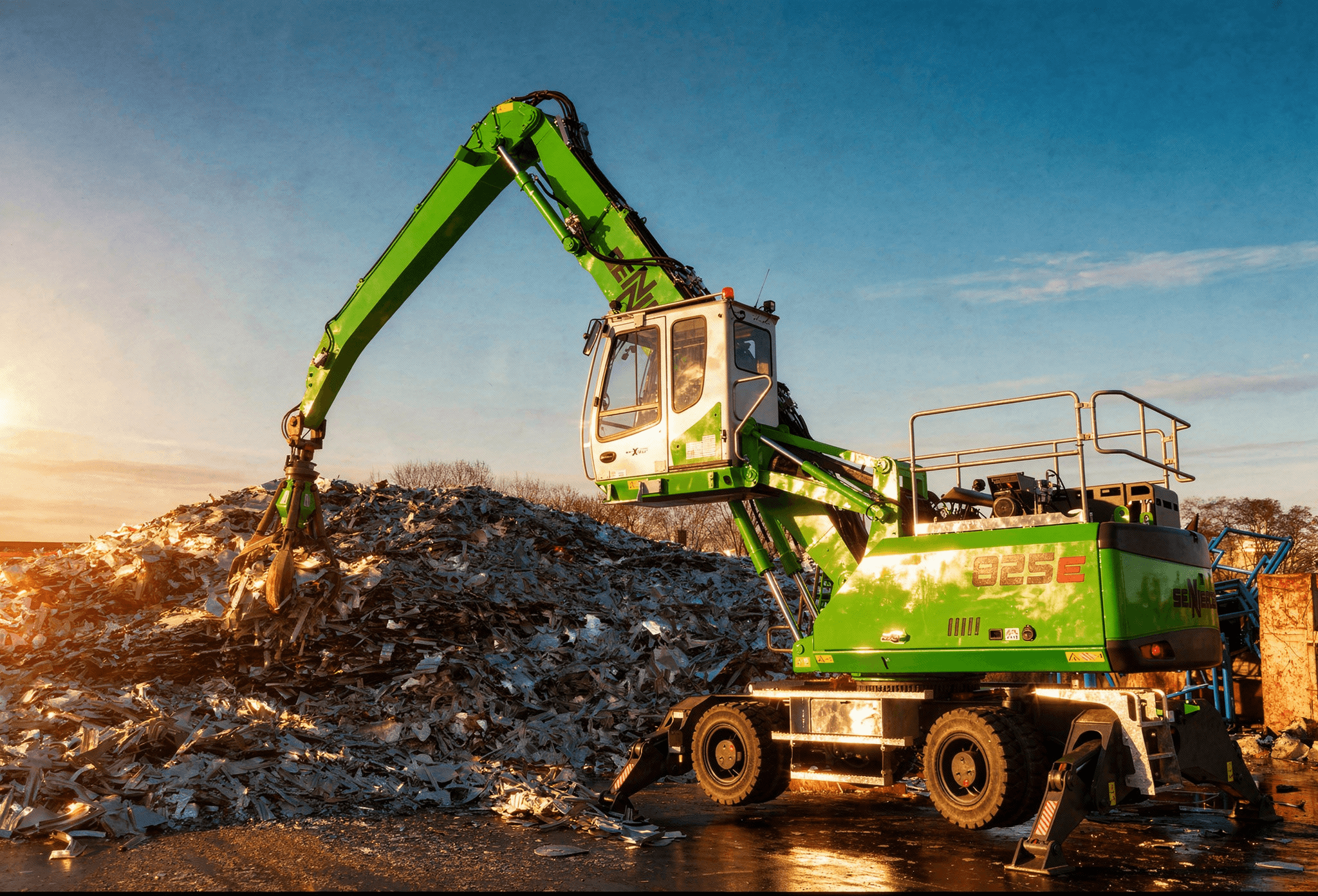
This is one reason why purpose-built material handlers are becoming more common across global port operations. According to Sennebogen's port-handling application references, modern bulk-handling environments increasingly require machines capable of sustained high-cycle movement, extended reach, improved visibility, simplified servicing, and lower operating costs per ton handled. Sennebogen's handling systems are specifically configured for continuous operation in ports, bulk terminals, and ship-loading applications where repetitive movement and uptime consistency matter more than occasional peak lifting capacity.
Forsenia's focus in India has similarly centred on aligning equipment with actual port handling conditions rather than relying on general-purpose adaptations that become difficult to sustain under high-volume operational pressure.
Productivity is now more about visibility and reach than raw machine size
In many port locations, the handling efficiency is highly dependent on the visibility and accuracy of the operators' movements. Operators need better sightlines throughout unloading zones, storage areas, and loading points as cargo volumes increase and yards become congested, to ensure safe handling speeds.
More and more raised cabins, longer booms and larger working radii are being designed into port-specific machines, as the efficiency of movement typically relies on minimising unnecessary repositioning inside the yard. Sennebogen material handlers are designed with these operating factors in mind, featuring hydraulically elevating cabs and long-reach versions to provide handling visibility across quay edges, vessel holds, and stockpile zones.
The shift is just one aspect of a wider trend in heavy industry. Productivity is no longer defined by the size of the machine, but by the efficiency of motion, the consistency of uptime and the accuracy of handling. Ports are considering the impact of equipment on fuel burn, cycle durations, maintenance periods, and operator tiredness during lengthy shifts, especially when continuous handling is required 24/7.
Electrification Is Starting to Change the Conversation Around Port Handling
As fuel costs and environmental standards climb, several of the world's ports are re-examining how they power material handling systems. Electrification of handling systems is gaining more attention with the focus on high-volume bulk operations when machines are operating almost constantly for long periods of time.
Sennebogen has highlighted various electric port-handling applications worldwide, including deployments where operators have reduced energy consumption by a significant amount while maintaining continuous handling performance. While Indian ports are at varying stages of adoption, conversations around electrified handling systems, lower-maintenance structures, and energy-efficient equipment are becoming increasingly popular in major infrastructure and logistics projects.
Forsenia is seeing growing interest in how ports can improve long-term operating efficiency while also reducing maintenance dependency and fuel-related operational pressure. These conversations are gradually moving material-handling decisions beyond acquisition cost alone toward lifecycle operating considerations.
Faster Material Movement Has Become an Infrastructure Requirement
India's ports are no longer operating as isolated cargo points. They now sit at the centre of manufacturing growth, industrial logistics, energy movement, and export infrastructure. As cargo expectations rise, the speed, reliability, and consistency of material movement within the terminal become increasingly important to the larger supply chain.
In India, Forsenia works directly with customers in ports, bulk-handling settings, industrial logistics, and heavy-material-moving applications, and is Sennebogen's sole country agent. The focus is not just on providing the equipment but also on helping to handle systems built for continuous-duty operation, long-term serviceability, operator visibility, and reliable uptime in tough port conditions.
Because in modern ports, movement is no longer just a handling function. It has become part of the infrastructure that keeps industry moving forward.
Forsenia
Engineering Progress. One Lift at a Time.
Disclaimer :
The operational examples, performance indicators, and industry observations presented in this article are intended for general informational purposes only. Actual machine performance, operating efficiency, and energy savings may vary depending on site conditions, application, operator practices, and equipment configuration.
Copyright :
© Forsenia. All rights reserved. Unauthorised reproduction or sharing of this content without prior written permission is prohibited.